
You may feel a mild stinging or warming sensation, but most people find the treatment very manageable. Many systems include built-in cooling to improve comfort.
Removing Thread Veins
Thread veins, also called spider veins or telangiectasia are harmless but often unwelcome. They appear as small red, purple, or blue lines near the skin’s surface and can occur on the face or legs. These veins don’t fade on their own, but modern, minimally invasive treatments can significantly reduce or eliminate them.
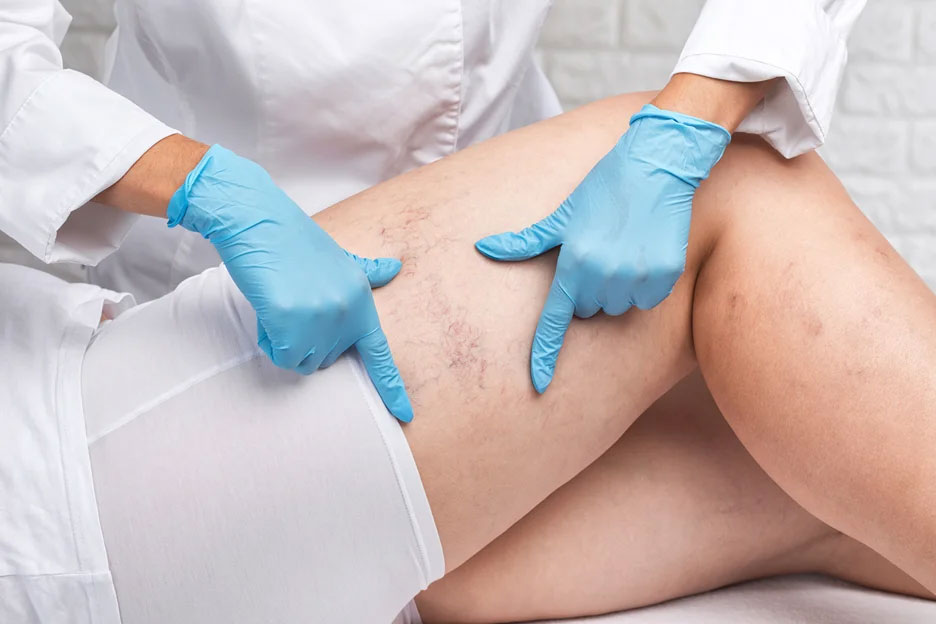
What Causes Thread Veins?
Thread veins form when tiny blood vessels just under the surface of the skin become enlarged or weakened. This can happen for several reasons, and often it is a combination of factors:
- Ageing – skin and blood vessels become less elastic over time
- Sun exposure – repeated sun damage can break down blood vessel walls
- Hormonal changes – including pregnancy, menopause, or use of contraceptives
- Genetics – some people are more prone to developing thread veins than others
- Lifestyle factors – standing or sitting for long periods can affect circulation
- Skin trauma – injuries, surgery, or harsh treatments may trigger broken capillaries
- Medical conditions – such as rosacea, which causes persistent redness and visible vessels on the face
While thread veins are common and usually harmless, they can become more noticeable over time. Laser treatment offers a safe and effective way to reduce or remove them.
How the Treatment Works
We use advanced laser technology to target unwanted thread veins without damaging the surrounding skin. The laser energy is absorbed by the blood within the visible vein, causing it to collapse. Over time, the body reabsorbs the treated vein, which fades from view.
This treatment is suitable for facial veins and smaller leg veins. For larger veins on the legs, other options such as sclerotherapy may be more suitable. During your consultation, we will assess the area and recommend the most appropriate method for you.
What to Expect
- Treatment time: Most sessions last between 30 and 60 minutes, depending on the size and number of veins being treated.
- Sensation: You may feel a warm or tingling sensation during the treatment. Most people find this comfortable and well tolerated.
- Aftercare: The treated area may appear red or slightly swollen for a short time. This usually settles within a day or two.
- Results: You may see an improvement after the first session, although a course of treatments is often recommended for best results. The number of sessions needed varies depending on the size and number of veins.
- Longevity: Once treated, thread veins do not return. However, new ones can develop over time, especially in areas prone to them. Maintenance treatments can help manage this.
Preventing New Thread Veins
Although treatment can remove existing thread veins, it cannot prevent new ones from forming. These tips can help reduce the chances of new veins developing:
- Avoid long periods of standing or sitting without movement
- Wear high-factor sun protection on areas exposed to sunlight
- Consider wearing support stockings for leg vein concerns
- Be gentle with your skin and avoid excessive heat exposure such as saunas or hot baths
Book your complimentary consultation
Reveal Your Best Skin!
Our experienced therapist, Faith will listen to your concerns and work with you to create a custom treatment plan.
Together, we’ll help you reach your skincare goals and enjoy that healthier, clearer, fresher ‘look’.

Frequently Asked Questions
Treated thread veins usually disappear and do not come back. However, new veins may appear over time and can be treated in the same way if needed.
Thread vein removal is commonly performed on the face, including the nose and cheeks, as well as the legs. Suitability depends on the size and location of the veins.
Many people see results after just one session. For larger areas or more stubborn veins, a course of treatments may be advised during your consultation.
There is very little downtime. You may experience mild redness or warmth in the area, but this usually settles within a day or two. You can return to normal activities after your appointment.